


How Long Do Car Batteries Last? A Kansas City Winter Guide
How Long Do Car Batteries Last?
Most car batteries last three to five years, according to AAA. Where you live and how you drive can push that number up or down. Heat, cold, short trips and the number of electronics in your vehicle all play a part.
A car battery is a 12-volt rechargeable battery that starts the engine and powers your vehicle’s electronics. Most gas-powered cars and trucks, including Fords, use a lead-acid 12-volt battery. Hybrids and electric vehicles also use a 12-volt battery for accessories and starting up their systems.

What Shortens a Car Battery’s Life?
Heat is the biggest factor. Consumer Reports explains that summer heat is tougher on car batteries than winter cold. High under-hood temperatures speed up the chemical wear inside the battery, even though the damage often shows up later.
Climate data from AAA, cited by Consumer Reports, shows how much location matters:
- Northernmost U.S. regions: batteries last 58 months or more on average.
- Southernmost U.S. regions: batteries last less than 41 months on average.
Other habits shorten battery life, too:
- Short trips. Quick errands may not give the alternator time to fully recharge the battery.
- Heavy electronics use. Heated seats, chargers and screens add load. AAA notes that lifespans may trend toward three years as vehicles add more electronics.
- Long periods of sitting. A parked vehicle slowly drains its battery.
- Corrosion and loose connections. Dirty or loose terminals can keep the battery from charging well.
How Does Kansas City Weather Affect Car Batteries?
Kansas City drivers get both extremes. Hot, humid summers wear down a battery’s internal parts. Then cold winter mornings ask that weakened battery to work its hardest.
That is why many batteries seem to “die in the first cold snap.” The summer heat did the damage, and winter exposes it. A battery that started a car easily in September may struggle on a frosty December morning in Raytown or Lee’s Summit.
What Cold Does to a Battery
Cold slows the chemical reaction that makes electricity. According to the AAA Automotive Research Center, a battery loses about 35% of its strength at 32°F and about 60% of its power at 0°F. At the same time, a cold engine is harder to turn over. AAA says starting in cold weather can take up to twice the current that a normal start needs.
Put those together and an older battery may not have enough reserve to start the engine. A battery test before winter is the easiest way to avoid a surprise.
Can a Car Battery Freeze?
Yes, but mainly when it is discharged. AAA explains that a fully charged battery would not freeze until temperatures fall below -76°F. A fully discharged battery, however, can freeze at 32°F. Keeping your battery charged and healthy is the best protection during a Kansas City cold snap.
A frozen or swollen battery should not be jump-started. Have it inspected, and if recommended replaced, instead.
What Are the Signs of a Weak Car Battery?
The most common signs are a slow crank, dim lights and electrical glitches. AAA lists these warning signs:
- Age: the battery is more than three years old.
- Lights: headlights look yellow or dim, or dome lights flicker.
- Warning lights: dashboard lights come on unexpectedly.
- Weak horn: the horn sounds quieter than usual.
- Accessories acting up: the radio, heated seats or phone chargers do not work normally.
- Physical damage: a rotten-egg smell, or a swollen, cracked or corroded battery.
If you notice any of these, have the battery tested soon. A slow start is often the first clue, and it tends to get worse as temperatures drop.
When Should You Test or Replace Your Car Battery?
Test your battery once a year after it reaches a certain age. Consumer Reports recommends an annual load test starting at two years old in a warm climate, or four years old in a cold climate. With Kansas City’s hot summers, testing yearly from the two-year mark is a smart habit.
A load test shows how well the battery holds up under demand. That is more useful than a simple voltage check. When it is time to replace, Consumer Reports suggests buying a battery that is less than six months old, ideally three months or newer. The manufacture date is printed on a sticker on the battery.
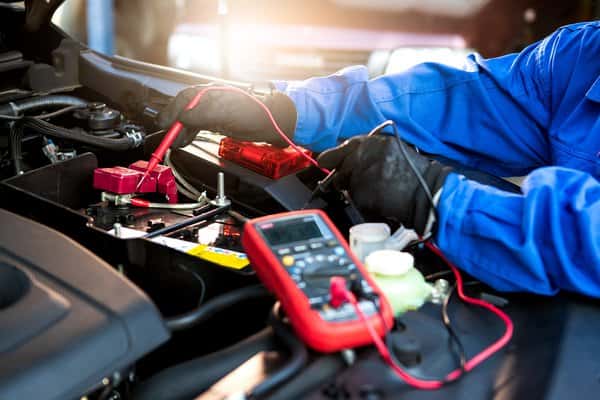
What Happens During a Battery Test?
A battery test checks how well your battery delivers power under load. AAA notes that it takes a battery tester to uncover problems, since corrosion alone is not proof of a bad battery. A technician connects the tester to the battery and reads its condition in a few minutes.
A good inspection also looks beyond the battery itself. The alternator and charging system keep the battery topped off while you drive. If they are not working well, even a new battery can run down. Checking the cables, terminals and hold-down at the same time helps make sure the whole system is ready for winter.
What Should You Do If Your Battery Dies?
If your vehicle will not start, check for simple causes first, such as a light left on. Then physical inspect the battery. Never jump a battery that looks cracked, swollen or leaking. If the battery does not show these signs, then follow the jump-starting steps in your owner’s manual, since the connection points vary by vehicle.
After a jump-start, have the battery tested soon. A battery that went completely flat may be weakened, and the cause should be found before the next cold morning.
How Can You Make Your Car Battery Last Longer?
You can stretch your battery’s life with a few simple habits:
- Drive longer stretches. Combine errands so the battery gets time to recharge.
- Keep it clean. Have corroded terminals cleaned and connections tightened.
- Park smart. A garage protects the battery from summer heat and winter cold.
- Turn things off. Make sure lights and accessories are off when you leave the vehicle.
- Test before winter. A fall battery check catches weak batteries before the first freeze.
- Keep up with maintenance. Routine service visits are a good time to check the battery and charging system.
Get Your Battery Checked at Greenway Ford
Greenway Ford in Raytown can test your battery, check the charging system and replace a worn battery when it is time. See current Ford battery service specials and our other Ford service specials, then schedule service online at a time that works for you.
Need a part for a do-it-yourself job? Our Ford parts center can help. Greenway Ford serves drivers from Raytown, Kansas City, Lee’s Summit, Blue Springs, Independence and Leawood. Visit us at 9505 E 350 Hwy, contact our team online, or call 816-482-3921 to book a battery check before the cold sets in.
0 comment(s) so far on How Long Do Car Batteries Last? A Kansas City Winter Guide